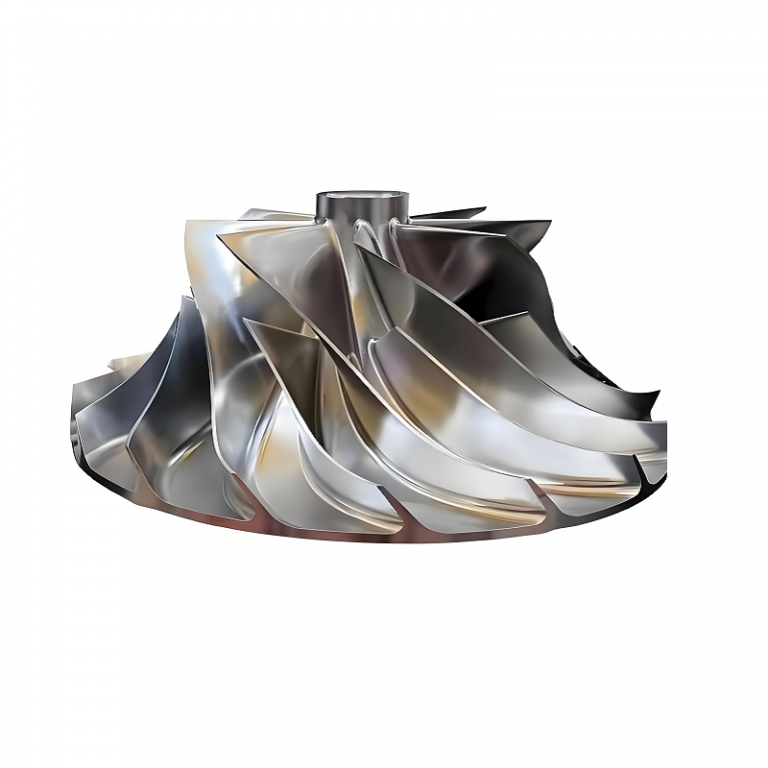
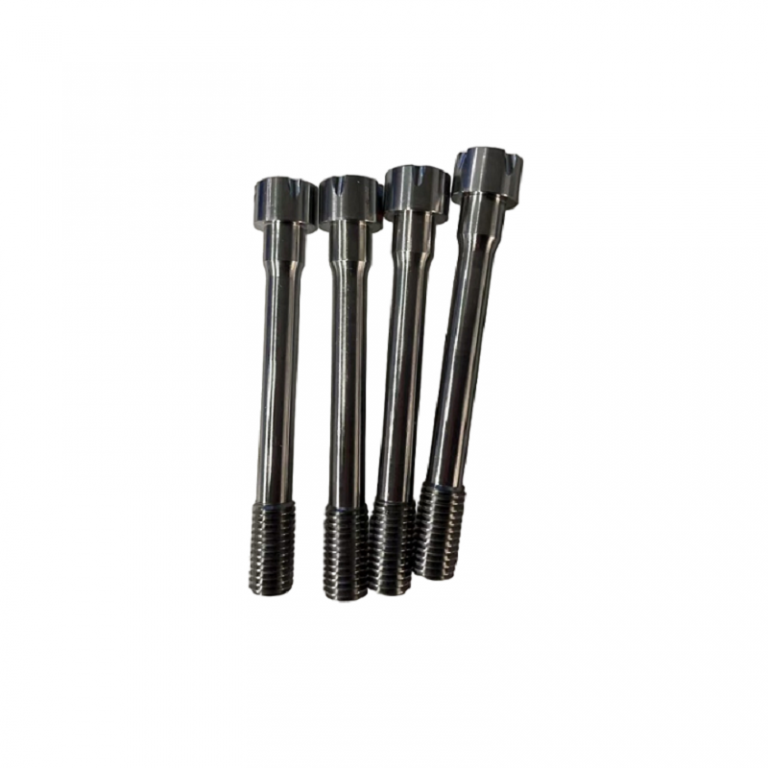
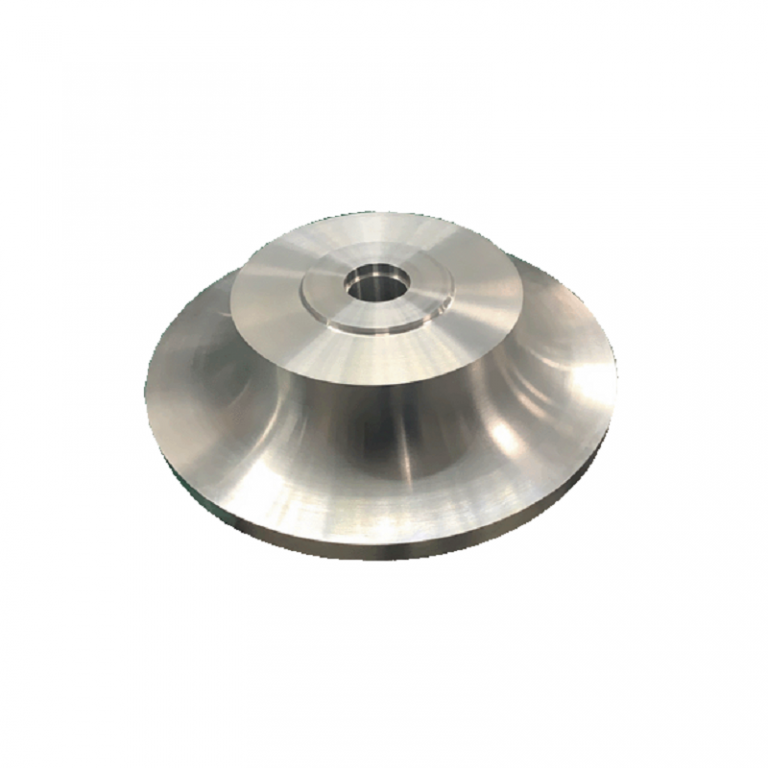
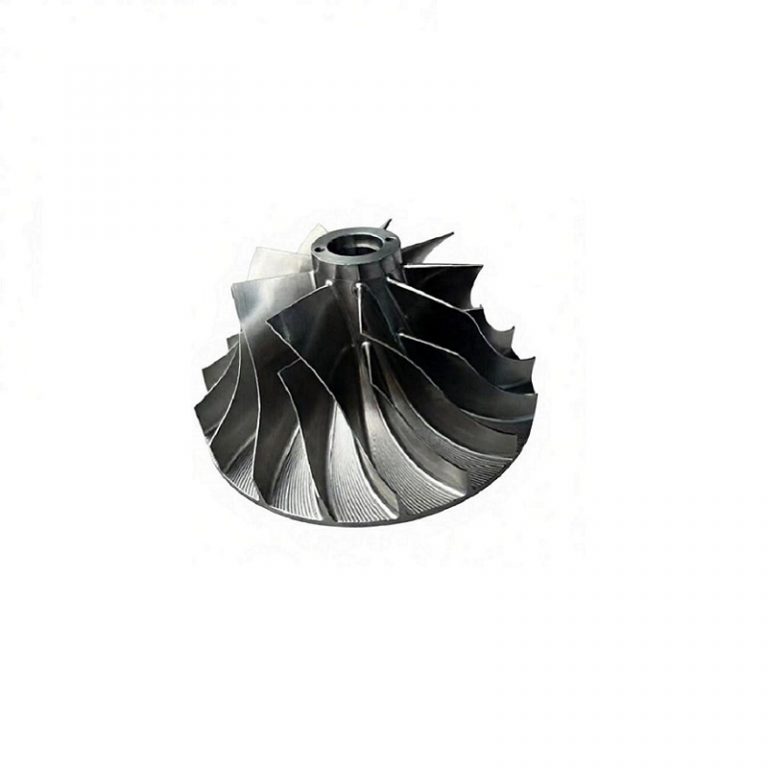

The company specializes in providing impeller products for famous European and American air compressor brand manufacturers and domestic wind turbine manufacturers. Committed to the production of stainless steel and aluminum-titanium alloy raw materials for high-speed impellers, as well as impeller blanks and finished products. The company has a history of nearly 30 years. It is located in the Wusong Economic Development Zone of Yangxing, Baoshan District. It covers an area of 15,000 square meters and has professional production equipment and technical production team. The company focuses on high-end advanced manufacturing and continuous innovation and development. The company relies on vacuum refining, electroslag, heat treatment, multi-axis CNC machining and various aspects of inspection and other excellent manufacturing processes and technologies to ensure product quality in all production links from raw materials to finished products, and is in a leading position in the same industry.

How to perform reverse engineering on a centrifugal impeller for an air compressor?
CD Centrifugal Impeller How to Perform Reverse Engineering on a Centrifugal Impeller for an Air Compressor? A centrifugal impeller can remain in service for years before a crack, unexpected vibration, declining compressor efficiency, or an unavailable spare part forces a closer inspection. In many cases, the original design drawings are missing, the equipment manufacturer no longer supplies the required component, or the existing impeller has been modified during previous repairs. Under these circumstances, reverse engineering can provide a practical route to restoring the compressor with a replacement impeller. However, reverse engineering a centrifugal impeller for an air compressor is not simply a matter of copying the shape of an old component. An impeller is a high-speed rotating part whose geometry, material properties, manufacturing quality, and balance all influence compressor performance and mechanical safety. A replacement may fit the shaft perfectly and still fail to deliver the required airflow,
Should I Replace the Impeller When Compressor Vibration Increases?
CD Centrifugal Impeller Should I Replace the Impeller When Compressor Vibration Increases? When compressor vibration increases, should you replace the impeller immediately? Not necessarily. Increased vibration is a warning sign, but it does not automatically mean the centrifugal impeller is damaged. The problem may come from impeller imbalance, deposits, bearing wear, shaft misalignment, loose components, or changes in operating conditions. For maintenance engineers, the first priority is to identify the root cause before deciding on a repair or replacement. For procurement managers, understanding the cause of the failure helps ensure that the replacement centrifugal impeller is technically compatible with the compressor and suitable for its operating conditions. This guide explains how to diagnose increased compressor vibration, identify potential impeller damage, determine when replacement is necessary, and select a reliable replacement air compressor impeller. 1. Why Does Compressor Vibration Increase? Centrifugal compressors operate at relatively high rotational speeds. Their
How to Solve the Problem of Centrifugal Compressor Impeller Breakage During Spin Test?
CD Centrifugal Impeller How to Solve the Problem of Centrifugal Compressor Impeller Breakage During Spin Test? A centrifugal compressor impeller can look perfect on the inspection bench and still fail when it is subjected to high rotational speed. This is one of the more difficult problems encountered during compressor component validation because the failure may occur suddenly, while the visible evidence left behind can be limited. When a centrifugal compressor impeller breaks during a spin test, the first reaction is often to ask whether the material was strong enough. That is an important question, but it is rarely the only one. A high-speed rotating impeller is exposed to centrifugal loading, vibration, aerodynamic forces, thermal effects, and local stress concentrations at the same time. A small deviation in mass distribution, geometry, material quality, surface condition, or assembly can become much more significant as rotational speed increases. For this reason,
Turbocharger Impellers Function, Design, and Materials
CD Centrifugal Impeller Turbocharger Impeller Function, Design, and Materials A turbocharger can continue running while its compressor performance is already beginning to deteriorate. The change may start with something that seems minor: a damaged blade edge, erosion on the impeller surface, an incorrect blade profile, excessive clearance, or a balance problem that becomes significant at high rotational speed. For operators, these issues may appear first as reduced airflow, unstable boost pressure, increased vibration, unusual noise, or higher-than-expected discharge temperature. For maintenance engineers, the difficult question is often not simply what failed? but is the impeller still serviceable, and if it needs replacement, how can the replacement be specified correctly? For purchasing managers, the challenge is different again. A replacement turbocharger impeller can look correct from the outside and still be unsuitable if its material, blade geometry, dimensions, or dynamic balance does not match the application. That is why
Centrifugal Compressor Impeller Replacement Tutorial
CD Centrifugal Impeller Centrifugal Compressor Impeller Replacement Tutorial Replacing a centrifugal compressor impeller is not simply a matter of removing the old wheel and installing a new one. The impeller is one of the most critical rotating components in a centrifugal compressor, and even a small dimensional, material, balance, or assembly error can affect compressor performance, vibration, efficiency, and service life. For procurement managers, the difficult part often comes before the replacement starts: identifying the correct impeller, confirming the compressor configuration, checking drawings and critical dimensions, selecting the appropriate material and manufacturing process, and making sure the supplier can provide a component that is mechanically and aerodynamically compatible with the existing machine. For inspection and maintenance teams, the challenge is different. The replacement must be installed without damaging the shaft, hub, sealing surfaces, bearings, or other rotating components. After installation, the rotor must be checked carefully before the
Centrifugal Impeller Replacement for Marine Turbocharger
CD Centrifugal Impeller Centrifugal Impeller Replacement for Marine Turbocharger A marine turbocharger may look like a compact rotating machine, but its centrifugal impeller operates under demanding conditions. High rotational speed, elevated temperature, continuous vibration, salt-laden air, exhaust contamination, and long operating hours can gradually affect the impeller's aerodynamic and mechanical condition. When the impeller is damaged, replacing it is not simply a matter of purchasing a component with the same outside diameter. The replacement centrifugal impeller must match the turbocharger's mechanical dimensions, aerodynamic requirements, rotational characteristics, material requirements, and balancing condition. For procurement managers, the challenge is finding a replacement impeller that is genuinely compatible with the existing turbocharger rather than merely "similar" in appearance. For inspection and maintenance teams, the priority is confirming that the replacement component has been manufactured and inspected to an appropriate technical standard before it is installed on a high-speed rotating assembly. This
Centrifugal Impeller Replacement for Sumy Machine Building Air Compressor
Centrifugal Impeller Replacement for Sumy Machine Building Air Compressor When a centrifugal air compressor begins to show increasing vibration, declining capacity, unstable operating conditions, or abnormal aerodynamic performance, the impeller deserves close attention. For a Sumy Machine Building air compressor, replacing the centrifugal impeller is not simply a matter of finding a component with the same outside diameter. The replacement must match the compressor's mechanical interface, aerodynamic requirements, rotational conditions, and balancing requirements. For procurement managers, maintenance engineers, and inspection teams, the real challenge is usually not finding a supplier. It is making sure that the replacement centrifugal impeller is dimensionally correct, mechanically reliable, properly balanced, and suitable for the compressor's actual operating conditions. This guide explains the key points that should be considered when sourcing a replacement centrifugal impeller for a Sumy Machine Building air compressor. What Is a Centrifugal Impeller in an Air Compressor? The centrifugal
MAN TCA Turbocharger Centrifugal Impeller
CD Centrifugal Impeller MAN TCA Turbocharger Centrifugal Impeller How to Identify, Specify, Inspect, and Purchase the Right Replacement Compressor Wheel For a procurement engineer, ordering a centrifugal impeller for a MAN TCA turbocharger may appear straightforward: identify the turbocharger model, send a request for quotation, compare prices, and place the order. In practice, it is rarely that simple. A turbocharger centrifugal impeller—often referred to in technical documentation as a compressor wheel—is a high-speed rotating component whose geometry, dimensional accuracy, material properties, mounting configuration, and balance condition all influence the performance and reliability of the turbocharger. MAN Energy Solutions identifies the compressor wheel as one of the principal components of its TCA-type turbocharger. Its published TCA documentation also describes the series as incorporating an easy-to-service compressor wheel, with optional water cooling depending on the configuration. For this reason, purchasing a replacement MAN TCA centrifugal impeller should not be treated
Centrifugal Open Impeller For Integrally Geared Single Stage Turbo Blower
CD Centrifugal Impeller Centrifugal Open Impeller For Integrally Geared Single Stage Turbo Blower Table of Contents Introduction Understanding the Centrifugal Open Impeller How an Open Impeller Works in an Integrally Geared Single Stage Turbo Blower Engineering Design Features That Determine Impeller Performance Material Selection: Choosing the Right Alloy for Long-Term Reliability Precision Manufacturing: From Digital Model to Finished Impeller Dynamic Balancing: A Critical Step Before Installation Quality Inspection and Testing Before Delivery Performance Benefits of a High-Quality Open Impeller How to Select the Right Centrifugal Open Impeller Incoming Inspection Checklist Preventive Maintenance Best Practices Common Failure Modes Root Cause Analysis Repair or Replace? OEM vs. Aftermarket Centrifugal Open Impellers: Which Is the Better Choice? Reverse Engineering: Restoring Performance Without Original Drawings Typical Industrial Applications Frequently Asked Questions (FAQ) Conclusion Introduction In every integrally geared single stage turbo blower, the impeller is far more than a rotating component—it
Open Impeller For Lone Star Turbo Centrifugal Blowers and Compressors
CD Centrifugal Impeller Open Impeller For Lone Star Turbo Centrifugal Blowers and Compressors It’s 2 a.m. and your Lone Star Turbo centrifugal blower just tripped on high vibration. The maintenance crew pulls the rotating assembly and finds the open impeller heavily eroded, with a few blades showing radial cracks near the hub. Now you’re staring at two problems at once: where to source a replacement open impeller that won’t set off another alarm in three months, and what you could have done to catch this before the midnight call. If that scenario feels familiar — whether you’re a procurement manager wrestling with long lead times or a vibration analyst who’s had one too many balancing jobs on aftermarket parts — this deep dive into open impellers for Lone Star Turbo blowers and compressors is written for you. The open impeller isn’t a commodity part on these machines; it’s