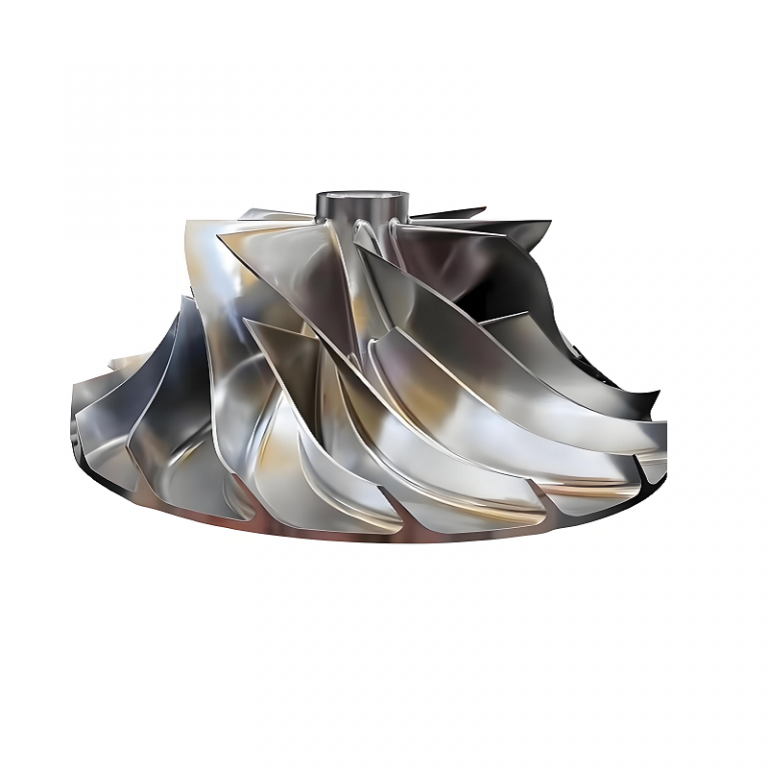
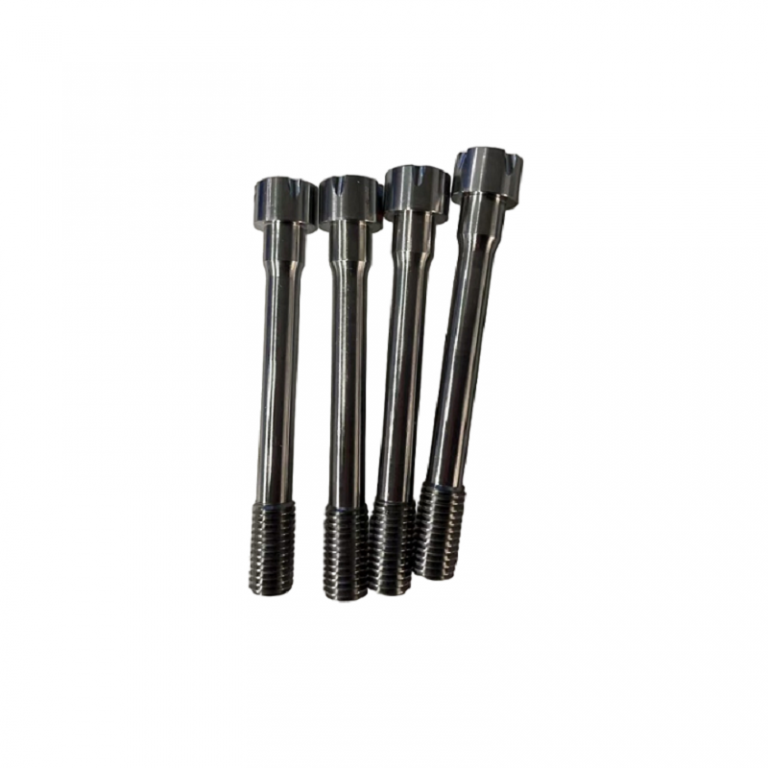
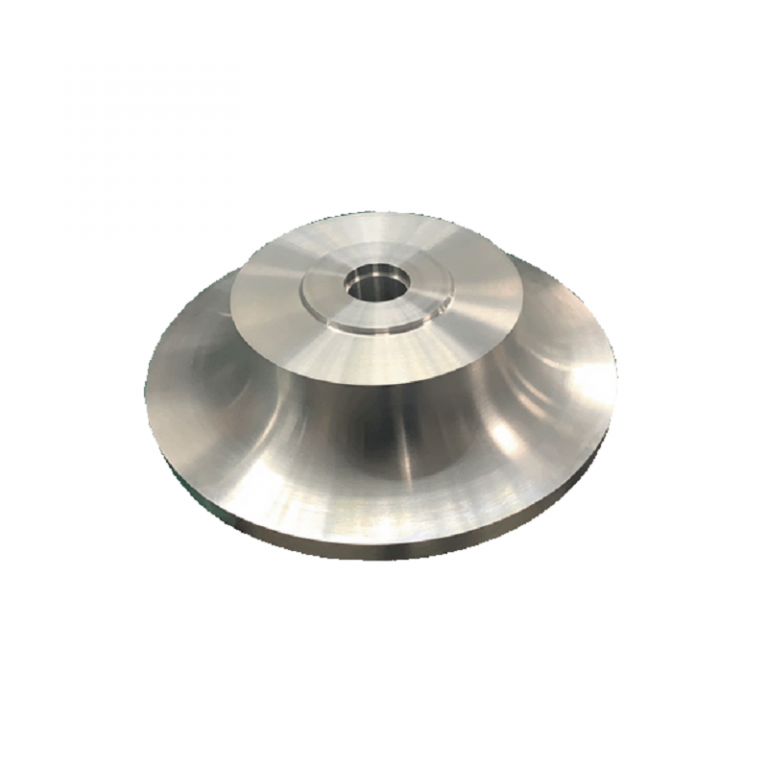
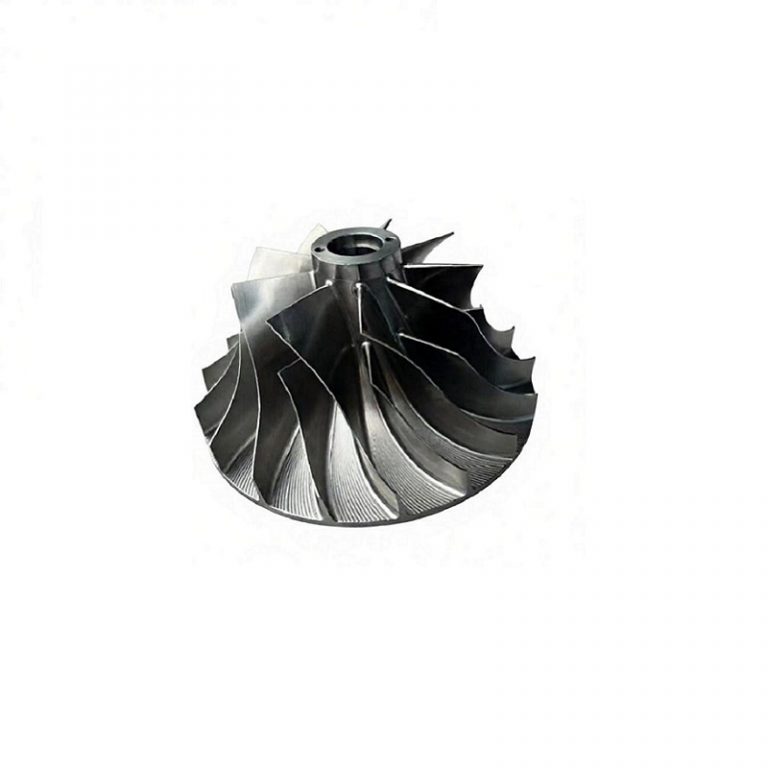

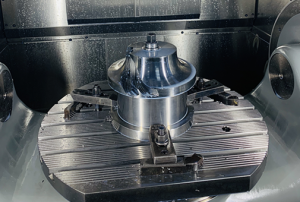
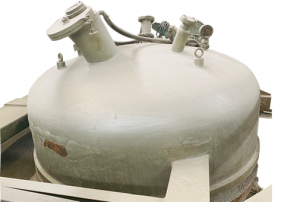
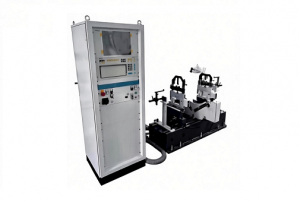
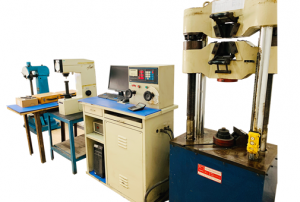
The company specializes in providing impeller products for famous European and American air compressor brand manufacturers and domestic wind turbine manufacturers. Committed to the production of stainless steel and aluminum-titanium alloy raw materials for high-speed impellers, as well as impeller blanks and finished products. The company has a history of nearly 30 years. It is located in the Wusong Economic Development Zone of Yangxing, Baoshan District. It covers an area of 15,000 square meters and has professional production equipment and technical production team. The company focuses on high-end advanced manufacturing and continuous innovation and development. The company relies on vacuum refining, electroslag, heat treatment, multi-axis CNC machining and various aspects of inspection and other excellent manufacturing processes and technologies to ensure product quality in all production links from raw materials to finished products, and is in a leading position in the same industry.

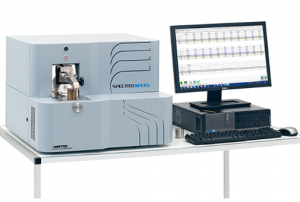
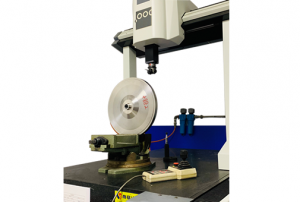
Heat Treatment for Centrifugal Impellers Explained
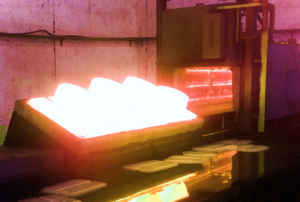
CD Centrifugal Impeller Heat Treatment for Centrifugal Impellers Explained Heat treatment is a critical, non-negotiable process for most centrifugal impellers, directly determining their performance, lifespan, and safety. Here’s a detailed breakdown of why it's done, common methods, and materials involved. 1. Primary Objectives of Heat Treatment for Impellers The main goals are to: Increase Strength and Hardness: To withstand immense centrifugal forces (can exceed 100,000 times gravity) and prevent deformation. Improve Fatigue Resistance: To endure millions of cyclic stress reversals without cracking. Relieve Internal Stresses: To eliminate residual stresses from casting, forging, welding, or machining, which can cause distortion or premature failure in service. Enhance Toughness (Impact Resistance): Especially for impellers in cryogenic service or those that may face foreign object damage. Optimize for Specific Environments: Such as corrosion or heat resistance. 2. Common Heat Treatment Processes by Material A. For Aluminum Alloy Impellers (Common in HVAC, Aerospace, some automotive) Typical Alloys: 356.0, A356.0, 6061,
Centrifugal Compressor Impeller Types Overview
CD Centrifugal Impeller Centrifugal Compressor Impeller Types Overview The two fundamental types of centrifugal compressor impellers are classified based on the direction in which the blades curve relative to the direction of rotation: 1. Backward-Leaning Impellers (Backward-Curved) Blade Direction: The blades curve against the direction of rotation. Key Characteristics: Higher Efficiency: Provides the best thermodynamic efficiency of the three main types. The blade geometry allows for a more gradual and efficient conversion of kinetic energy into pressure in the diffuser. Non-Overloading Power Characteristic: The required power peaks and then decreases as flow increases, preventing motor overload at high flows. Wide Operating Range: Generally offers a broader stable operating range. Higher Pressure Rise per Stage: Compared to radial blades, but typically lower than forward-leaning for a given tip speed. 2. Forward-Leaning Impellers (Forward-Curved) Blade Direction: The blades curve in the same direction as the rotation. Key Characteristics: Highest Pressure Rise per Stage: For a given impeller diameter and speed, it
Types of Impeller: Classification and Applications
CD Centrifugal Impeller Types of Impeller: Classification and Applications The term "3 types of impeller" is common, but impellers can be categorized in several key ways. Here are the three most fundamental and useful classifications: 1. By Flow Direction (Most Common Classification) This categorizes how the fluid moves through the impeller relative to its axis of rotation. Centrifugal (Radial Flow): How it works: Fluid enters axially at the eye (center) and is accelerated outward radially (perpendicular to the shaft) by centrifugal force. It exits the volute casing at high pressure. Characteristics: High pressure, moderate to high flow. The classic pump impeller. Applications: Water pumps, industrial process pumps, HVAC systems, automotive coolant pumps. Axial Flow: How it works: Fluid enters and exits essentially parallel to the shaft (axially), like a propeller. It pushes the fluid rather than throwing it outward. Characteristics: Very high flow, low pressure lift. Applications: Boat propellers, pumps for large volumes
In which industries are centrifugal impellers primarily used?
CD Centrifugal Impeller In which industries are centrifugal impellers primarily used? Centrifugal impellers are critical components in centrifugal pumps, blowers, compressors, and turbines. Their primary function is to transfer energy to a fluid (liquid or gas) by increasing its pressure and kinetic energy through rotational motion. Consequently, they are foundational to a vast array of industries. Here are the primary industries where they are used: 1. Water & Wastewater Treatment Applications: Raw water intake, filtration, chemical dosing, sewage transfer, aeration basins, and final effluent discharge. Purpose: Moving large volumes of water and wastewater through various treatment stages. Aeration impellers are crucial for introducing oxygen into biological treatment processes. 2. HVAC (Heating, Ventilation, and Air Conditioning) Applications: Commercial and residential air handlers, cooling towers, chillers, and furnaces. Purpose: Circulating air, chilled water, and hot water to regulate temperature and air quality in buildings. 3. Oil, Gas, and Petrochemical Applications: Crude oil transfer, pipeline boosting, refinery
How to make an impeller for centrifugal air compressor?
CD Centrifugal Impeller How to make an impeller for centrifugal air compressor? Making a centrifugal compressor impeller is a serious engineering and manufacturing challenge due to the extreme forces, tolerances, and aerodynamic requirements. It's not a typical DIY project, but understanding the process is fascinating. Here is a comprehensive guide, moving from concept to finished part, with emphasis on the critical considerations at each step. Severe Warning & Disclaimer A centrifugal compressor impeller operates at tens of thousands to over 100,000 RPM. A failure due to poor design, material, or manufacturing is catastrophic—equivalent to a grenade exploding. This guide is for educational understanding only. Professional design, material certification, precision machining (CNC), and dynamic balancing are absolutely mandatory for any functional impeller. Phase 1: Design & Engineering This is the most critical phase. You cannot just "make a shape." Define Requirements: Mass Flow Rate: How much air (kg/s or CFM) do you need? Pressure
How to avoid high-cycle fatigue fracture of centrifugal impellers in air compressors?
CD Centrifugal Impeller How to avoid high-cycle fatigue fracture of centrifugal impellers in air compressors? High-cycle fatigue (HCF) in centrifugal impellers is one of the most common and catastrophic failure modes in air compressors. It occurs when alternating stresses—often caused by aerodynamic excitation or mechanical vibration—exceed the material’s endurance limit over millions of cycles. Avoiding HCF fracture requires a holistic approach that spans design, manufacturing, and operational maintenance. Here is a structured strategy to mitigate this risk. 1. Design Phase: Avoid Resonance & Reduce Excitation The primary driver of HCF is resonance between the impeller’s natural frequencies and excitation forces. Conduct Detailed Modal Analysis (FEA):Perform finite element analysis (FEA) to calculate the impeller’s natural frequencies (Campbell diagram). Ensure that there is a sufficient safety margin (typically 10–15%) between the impeller’s natural frequencies and the excitation harmonics (blade passing frequency, nozzle wake frequencies, and integer multiples of shaft
What is the function of an impeller in a centrifugal air compressor?
CD Centrifugal Impeller What is the function of an impeller in a centrifugal air compressor? In a centrifugal air compressor, the impeller is the heart of the machine and its primary rotating component. Its core function is to transfer kinetic energy from the motor/driver to the air, accelerating it and converting that energy into pressure. Here’s a detailed breakdown of its functions: 1. Primary Function: Energy Transfer & Acceleration The impeller is a high-speed rotor with curved blades (vanes). As it spins (typically at 10,000 - 100,000 RPM), the air between its blades is forced outward radially from the center (eye) to the periphery. This centrifugal action massively increases the air's velocity (kinetic energy). 2. Key Sub-Functions and Roles: Air Intake & Direction: Air enters axially through the "eye" of the impeller. The impeller's geometry immediately captures and directs the flow radially outward. Creating Centrifugal Force: The spinning motion imparts a powerful centrifugal force on