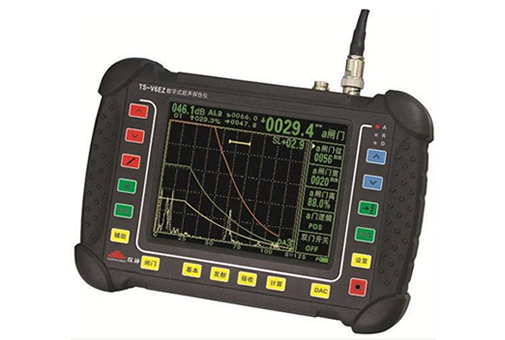
Flaw Detector For Centrifugal Impeller
A Flaw Detector for Centrifugal Impellers is a critical system in turbomachinery, ensuring safety, reliability, and performance. Impellers are high-stress components where flaws can lead to catastrophic failure.
Why Impeller Flaw Detection is Critical
High-Stress Component: Operates under extreme centrifugal, thermal, and fluid dynamic loads.
Failure Consequence: Crack propagation can cause impeller burst (contained or uncontained), leading to equipment destruction, downtime, and safety hazards.
Performance: Internal defects like porosity or inclusions can be initiation sites for fatigue cracks.
Key Standards & Best Practices
API 617/ISO 10439: For centrifugal compressors in oil & gas.
ASME BPV Code Sec V: Covers NDT methods.
ASME BPV Code Sec VIII: For pressure vessel components.
Aerospace Standards (AMS, NADCAP): Stringent requirements for aerospace impellers.
Best Practice: Implement a Quality Plan specifying methods, acceptance criteria (based on fracture mechanics), inspection intervals, and personnel certification (e.g., ASNT Level II/III).
Selecting the right flaw detector for a centrifugal impeller is not about a single technology. It's a multi-method strategy tailored to the manufacturing stage, material, design, and service conditions. A typical regime combines VT, PT/MT for surfaces, PAUT for critical internal areas and welds, and CT/RT for comprehensive volumetric analysis of high-integrity components. The trend is towards digital, automated, and quantifiable methods (PAUT, CT, DR) paired with data analytics to ensure the highest level of reliability for these critical rotating components.
Contact Information
- Tel
+86 17821620679
- Address
No.188 Road Chunhe,
Baoshan District, Shanghai China
