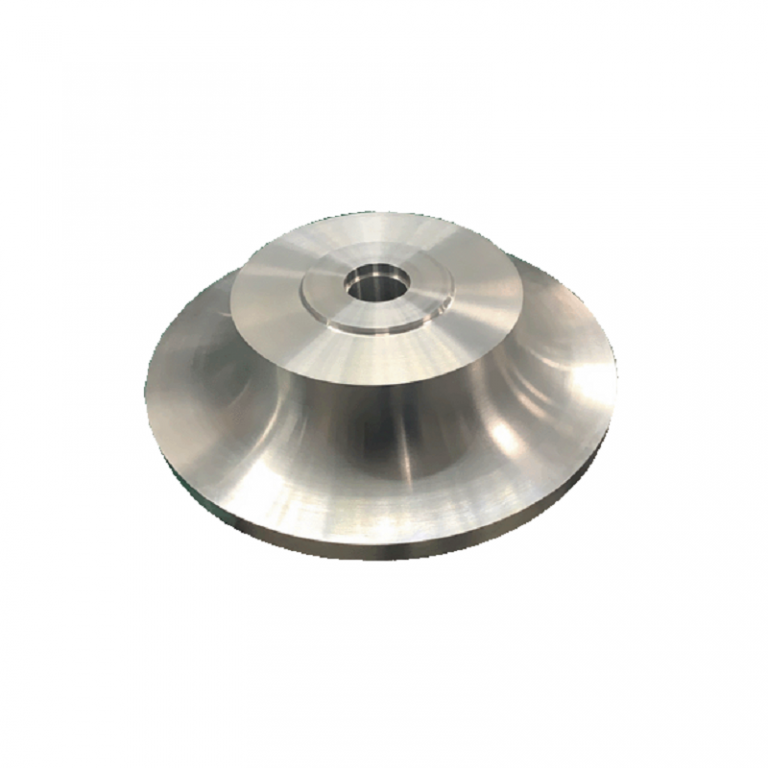
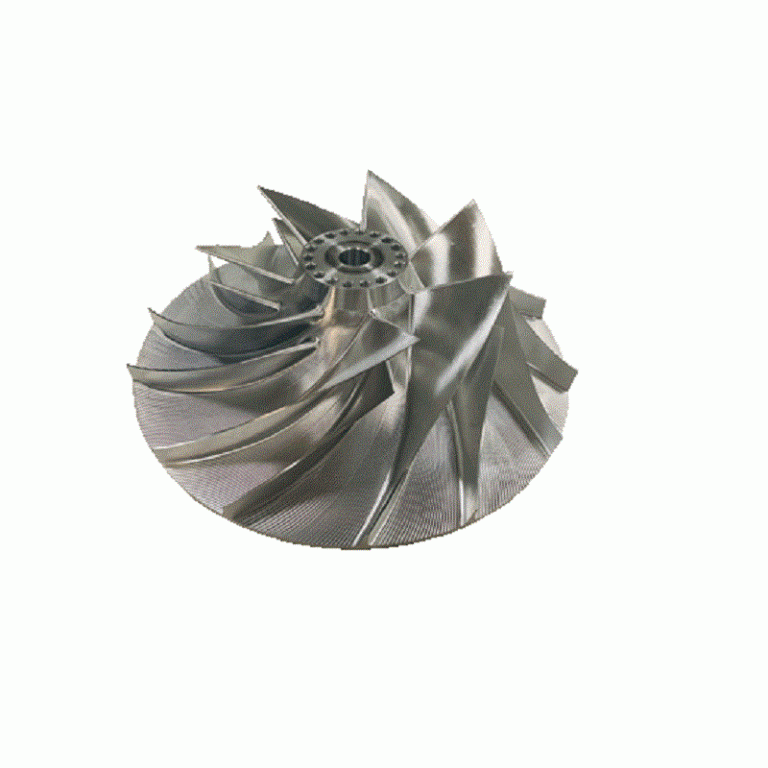
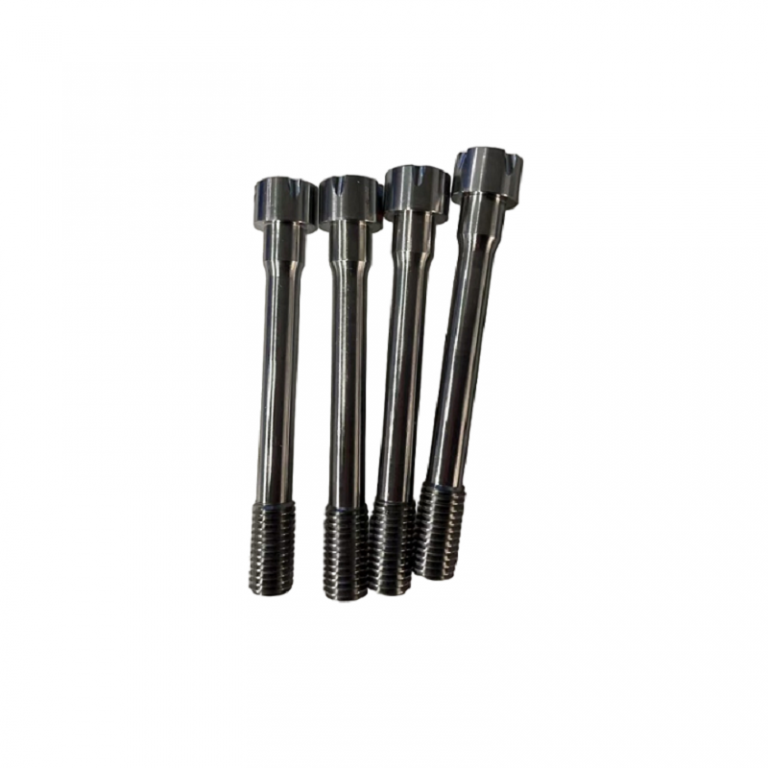

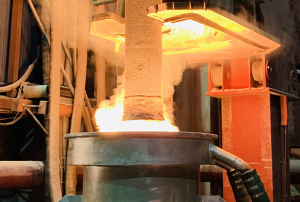
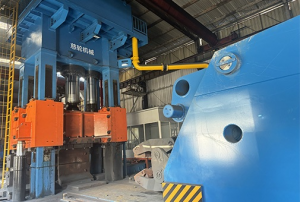
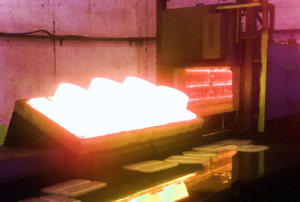
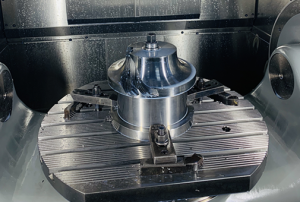
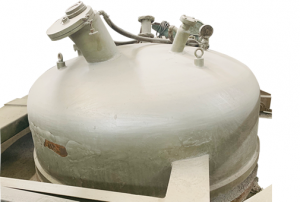
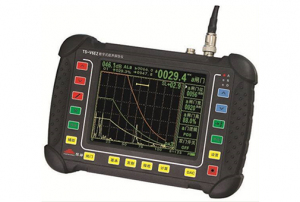
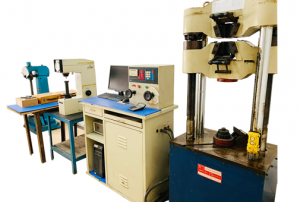
The company specializes in providing impeller products for famous European and American air compressor brand manufacturers and domestic wind turbine manufacturers. Committed to the production of stainless steel and aluminum-titanium alloy raw materials for high-speed impellers, as well as impeller blanks and finished products. The company has a history of nearly 30 years. It is located in the Wusong Economic Development Zone of Yangxing, Baoshan District. It covers an area of 15,000 square meters and has professional production equipment and technical production team. The company focuses on high-end advanced manufacturing and continuous innovation and development. The company relies on vacuum refining, electroslag, heat treatment, multi-axis CNC machining and various aspects of inspection and other excellent manufacturing processes and technologies to ensure product quality in all production links from raw materials to finished products, and is in a leading position in the same industry.
CD impeller is the supplier of high quality centrifugal impeller from China
CD Impeller is a leading Chinese manufacturer and supplier specializing in high-quality centrifugal impellers. We combine advanced manufacturing technology with rigorous quality control to produce precision impellers for a wide range of industrial applications, including: HVAC & Ventilation: Fans, air handlers, and exhaust systems. Industrial Processing: Pump impellers for water treatment, chemical processing, and irrigation. Air Moving Equipment: Dust collectors, cooling units, and pneumatic conveyors. Specialized Machinery: Custom impellers for unique OEM applications. Our Strengths: Quality Materials: Use of premium alloys, stainless steels, and composites. Precision Engineering: Advanced CNC machining, casting, and dynamic balancing. Customization: Ability to design and produce impellers to meet specific performance criteria (CFM, pressure, size, material). Competitive Pricing: Leveraging efficient manufacturing to provide excellent cost-effectiveness. Reliable Supply: Consistent output and dependable delivery schedules. Why Source from China with CD Impeller?Sourcing from China offers significant advantages in cost and scale. Partnering with a specialized supplier like CD Impeller ensures you receive components that meet international standards for performance,
Three coordinates testing for centrifugal impeller
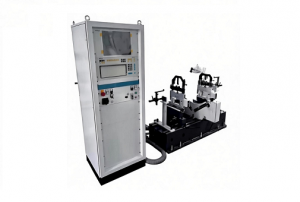
When discussing "three coordinates" for testing a centrifugal impeller, it typically refers to the different frames of reference or measurement systems used to analyze its performance, design geometry, and flow physics. Here are the three primary coordinate systems used: 1. Cartesian Coordinates (X, Y, Z) Purpose: Design, Manufacturing, and Static Measurement. Description: The absolute, stationary reference frame. This is the language of CAD models, CNC machines, and coordinate measuring machines (CMM). Use in Testing: Dimensional Verification: Measuring the exact blade profile, hub and shroud contours, leading and trailing edge positions. Vibration Analysis: Measuring casing vibrations in X, Y, Z directions during testing. Computational Fluid Dynamics (CFD) Setup: The computational domain (inlet, volute, etc.) is defined in Cartesian coordinates. Testing Context: "The CMM probe recorded the blade surface at 500 points defined in (X, Y, Z) to compare against the CAD nominal geometry." 2. Cylindrical Coordinates (R, θ, Z) Purpose: Flow Analysis and Performance Evaluation. Description: A rotating frame aligned with
Centrifugal Compressor Impeller Operation Overview
Here is a comprehensive overview of a centrifugal compressor impeller, the heart of a centrifugal compressor. Core Definition The impeller is the rotating component of a centrifugal compressor. Its primary function is to transfer energy from a driving motor (or turbine) to the fluid (typically air or gas) by accelerating it radially outward. This converts mechanical shaft work into kinetic energy and pressure. Key Design Features & Terminology Hub: The central solid disc that mounts onto the compressor shaft. Blades/vanes: The curved airfoils attached to the hub. They are the critical elements that guide and energize the fluid. Their shape (backswept, radial, or forward-swept) is crucial for performance. Shroud (or Cover): Open Impeller: No shroud; blades are open. Used for dirty gases or suspended solids (e.g., some industrial compressors). Semi-Open Impeller: A shroud on one side (usually front). Common in mid-range applications. Closed Impeller: Blades are fully enclosed by a hub and shroud. Highest efficiency, most common in clean gas
Heat Treatment for Centrifugal Impellers Explained
Heat treatment is a critical, non-negotiable process for most centrifugal impellers, directly determining their performance, lifespan, and safety. Here’s a detailed breakdown of why it's done, common methods, and materials involved. 1. Primary Objectives of Heat Treatment for Impellers The main goals are to: Increase Strength and Hardness: To withstand immense centrifugal forces (can exceed 100,000 times gravity) and prevent deformation. Improve Fatigue Resistance: To endure millions of cyclic stress reversals without cracking. Relieve Internal Stresses: To eliminate residual stresses from casting, forging, welding, or machining, which can cause distortion or premature failure in service. Enhance Toughness (Impact Resistance): Especially for impellers in cryogenic service or those that may face foreign object damage. Optimize for Specific Environments: Such as corrosion or heat resistance. 2. Common Heat Treatment Processes by Material A. For Aluminum Alloy Impellers (Common in HVAC, Aerospace, some automotive) Typical Alloys: 356.0, A356.0, 6061, 2618. Standard Process: Solution Heat Treatment & Aging (Precipitation Hardening) Solution Treatment: Heated to ~990°F
Centrifugal Compressor Impeller Types Overview
The two fundamental types of centrifugal compressor impellers are classified based on the direction in which the blades curve relative to the direction of rotation: 1. Backward-Leaning Impellers (Backward-Curved) Blade Direction: The blades curve against the direction of rotation. Key Characteristics: Higher Efficiency: Provides the best thermodynamic efficiency of the three main types. The blade geometry allows for a more gradual and efficient conversion of kinetic energy into pressure in the diffuser. Non-Overloading Power Characteristic: The required power peaks and then decreases as flow increases, preventing motor overload at high flows. Wide Operating Range: Generally offers a broader stable operating range. Higher Pressure Rise per Stage: Compared to radial blades, but typically lower than forward-leaning for a given tip speed. 2. Forward-Leaning Impellers (Forward-Curved) Blade Direction: The blades curve in the same direction as the rotation. Key Characteristics: Highest Pressure Rise per Stage: For a given impeller diameter and speed, it generates the highest static pressure rise. Compact Size: Can achieve a required pressure
Types of Impeller: Classification and Applications
The term "3 types of impeller" is common, but impellers can be categorized in several key ways. Here are the three most fundamental and useful classifications: 1. By Flow Direction (Most Common Classification) This categorizes how the fluid moves through the impeller relative to its axis of rotation. Centrifugal (Radial Flow): How it works: Fluid enters axially at the eye (center) and is accelerated outward radially (perpendicular to the shaft) by centrifugal force. It exits the volute casing at high pressure. Characteristics: High pressure, moderate to high flow. The classic pump impeller. Applications: Water pumps, industrial process pumps, HVAC systems, automotive coolant pumps. Axial Flow: How it works: Fluid enters and exits essentially parallel to the shaft (axially), like a propeller. It pushes the fluid rather than throwing it outward. Characteristics: Very high flow, low pressure lift. Applications: Boat propellers, pumps for large volumes of water (irrigation, flood control), wind tunnels, ventilation fans. Mixed Flow: How
In which industries are centrifugal impellers primarily used?
Centrifugal impellers are critical components in centrifugal pumps, blowers, compressors, and turbines. Their primary function is to transfer energy to a fluid (liquid or gas) by increasing its pressure and kinetic energy through rotational motion. Consequently, they are foundational to a vast array of industries. Here are the primary industries where they are used: 1. Water & Wastewater Treatment Applications: Raw water intake, filtration, chemical dosing, sewage transfer, aeration basins, and final effluent discharge. Purpose: Moving large volumes of water and wastewater through various treatment stages. Aeration impellers are crucial for introducing oxygen into biological treatment processes. 2. HVAC (Heating, Ventilation, and Air Conditioning) Applications: Commercial and residential air handlers, cooling towers, chillers, and furnaces. Purpose: Circulating air, chilled water, and hot water to regulate temperature and air quality in buildings. 3. Oil, Gas, and Petrochemical Applications: Crude oil transfer, pipeline boosting, refinery process pumps, LNG (liquefied natural gas) processing, and chemical feedstock transfer. Purpose: Handling a wide range of
How to make an impeller for centrifugal air compressor?
Making a centrifugal compressor impeller is a serious engineering and manufacturing challenge due to the extreme forces, tolerances, and aerodynamic requirements. It's not a typical DIY project, but understanding the process is fascinating. Here is a comprehensive guide, moving from concept to finished part, with emphasis on the critical considerations at each step. Severe Warning & Disclaimer A centrifugal compressor impeller operates at tens of thousands to over 100,000 RPM. A failure due to poor design, material, or manufacturing is catastrophic—equivalent to a grenade exploding. This guide is for educational understanding only. Professional design, material certification, precision machining (CNC), and dynamic balancing are absolutely mandatory for any functional impeller. Phase 1: Design & Engineering This is the most critical phase. You cannot just "make a shape." Define Requirements: Mass Flow Rate: How much air (kg/s or CFM) do you need? Pressure Ratio (or Boost Pressure): What outlet pressure do you need? Rotational Speed (RPM): Determined by your driver (motor,
What are the types of centrifugal impellers?
Centrifugal impellers are the heart of a centrifugal pump, blower, or compressor, and their design is critical for performance. They are classified based on several key characteristics. Here’s a detailed breakdown of the main types: 1. Based on Mechanical Construction (Shroud Design) This is the most fundamental classification, relating to how the blades are enclosed. Open Impeller: Design: Blades are attached to a central hub without any side walls (shrouds). The blades are open on both sides. Advantages: Less prone to clogging, easy to clean and inspect. Often less expensive to manufacture. Disadvantages: Lower efficiency due to significant fluid recirculation (leakage) between the blades and the pump casing. Requires careful clearance adjustment. Lower structural strength. Applications: Slurry pumps, wastewater pumps, and pumps handling fluids with suspended solids or stringy materials. Semi-Open (or Partially Open) Impeller: Design: Blades are attached to a hub with a single shroud (wall) on one side, usually the back side. The front side
What is the function of an impeller in a centrifugal air compressor?
In a centrifugal air compressor, the impeller is the heart of the machine and its primary rotating component. Its core function is to transfer kinetic energy from the motor/driver to the air, accelerating it and converting that energy into pressure. Here’s a detailed breakdown of its functions: 1. Primary Function: Energy Transfer & Acceleration The impeller is a high-speed rotor with curved blades (vanes). As it spins (typically at 10,000 - 100,000 RPM), the air between its blades is forced outward radially from the center (eye) to the periphery. This centrifugal action massively increases the air's velocity (kinetic energy). 2. Key Sub-Functions and Roles: Air Intake & Direction: Air enters axially through the "eye" of the impeller. The impeller's geometry immediately captures and directs the flow radially outward. Creating Centrifugal Force: The spinning motion imparts a powerful centrifugal force on the air molecules, flinging them toward the outer diameter. This is the namesake "centrifugal" effect. Velocity Increase: The curved
