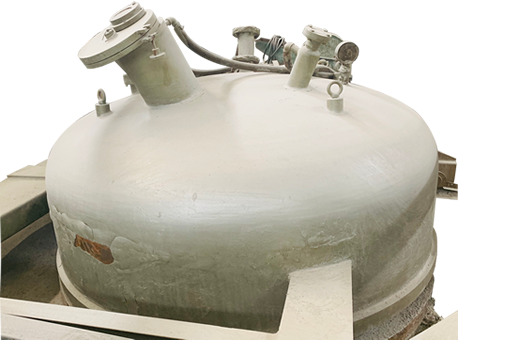
Vacuum Refining for Centrifugal Impeller Performance
Vacuum Refining for Centrifugal Impellers is a critical material processing technique that directly impacts the performance, durability, and safety of high-end impellers used in demanding applications like aerospace, oil & gas, and power generation.
The primary goals of vacuum refining for impellers are:
Elimination of Gas Porosity: Dissolved hydrogen is the main cause of hydrogen embrittlement and can lead to void formation (porosity) during solidification. Under high centrifugal stress, these microscopic pores can become initiation points for cracks, leading to catastrophic failure.
Reduction of Non-Metallic Inclusions: Oxides, nitrides, and other brittle inclusions act as stress concentrators. Vacuum refining lowers oxygen and nitrogen content, reducing harmful inclusions like alumina (Al₂O₃) or titanium nitride (TiN). This dramatically improves fatigue strength and fracture toughness.
Precise Chemistry Control: Under vacuum, reactive elements like Aluminum, Titanium, and Zirconium can be added and controlled with high precision without oxidation loss. This is vital for achieving the desired microstructure (e.g., gamma prime precipitation in nickel superalloys).
Improved Homogeneity and Grain Structure: Processes like VAR produce a very uniform, directional solidification structure with a fine, equiaxed grain. This eliminates chemical segregation from the primary melt and results in isotropic mechanical properties—meaning the impeller's strength is consistent in all directions, which is non-negotiable for a rotating part.
Contact Information
- Tel
+86 17821620679
- Address
No.188 Road Chunhe,
Baoshan District, Shanghai China
